Last updated November 20, 2026
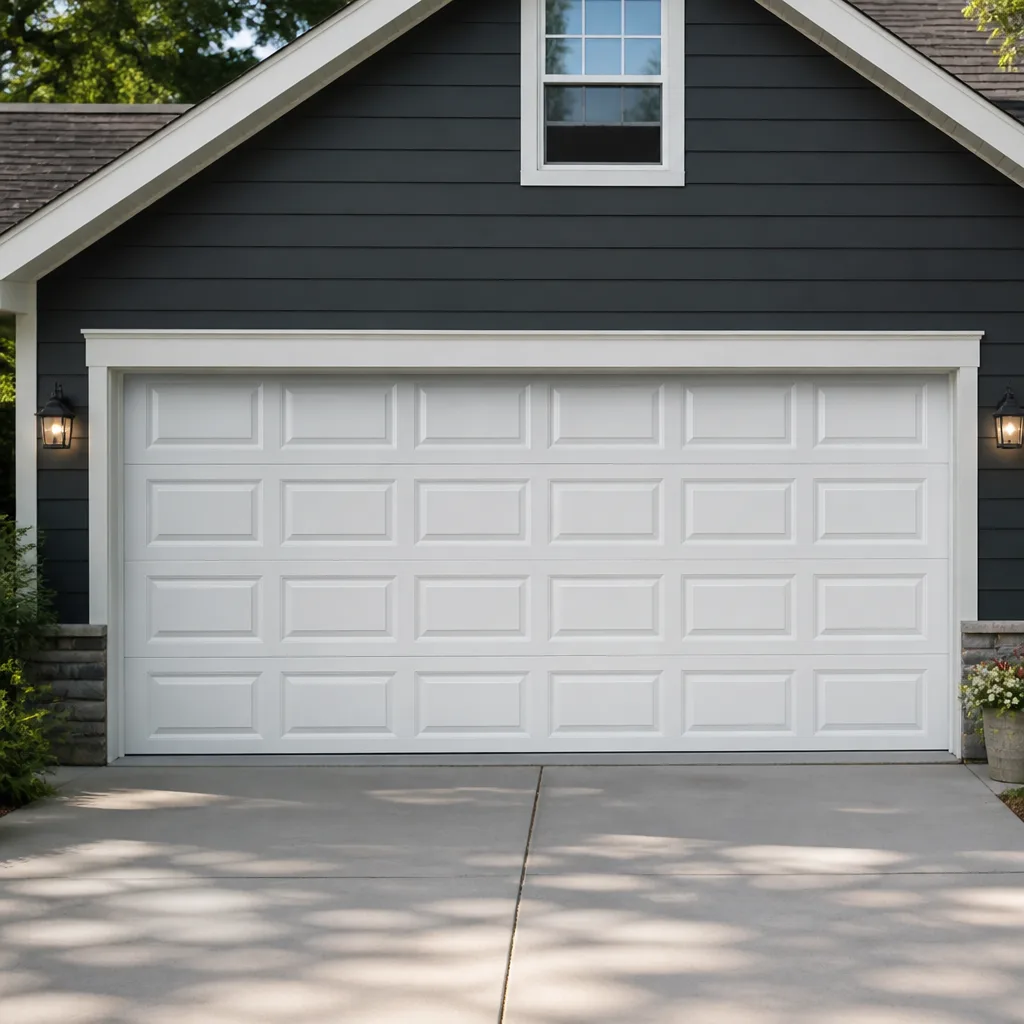 Raised-panel steel
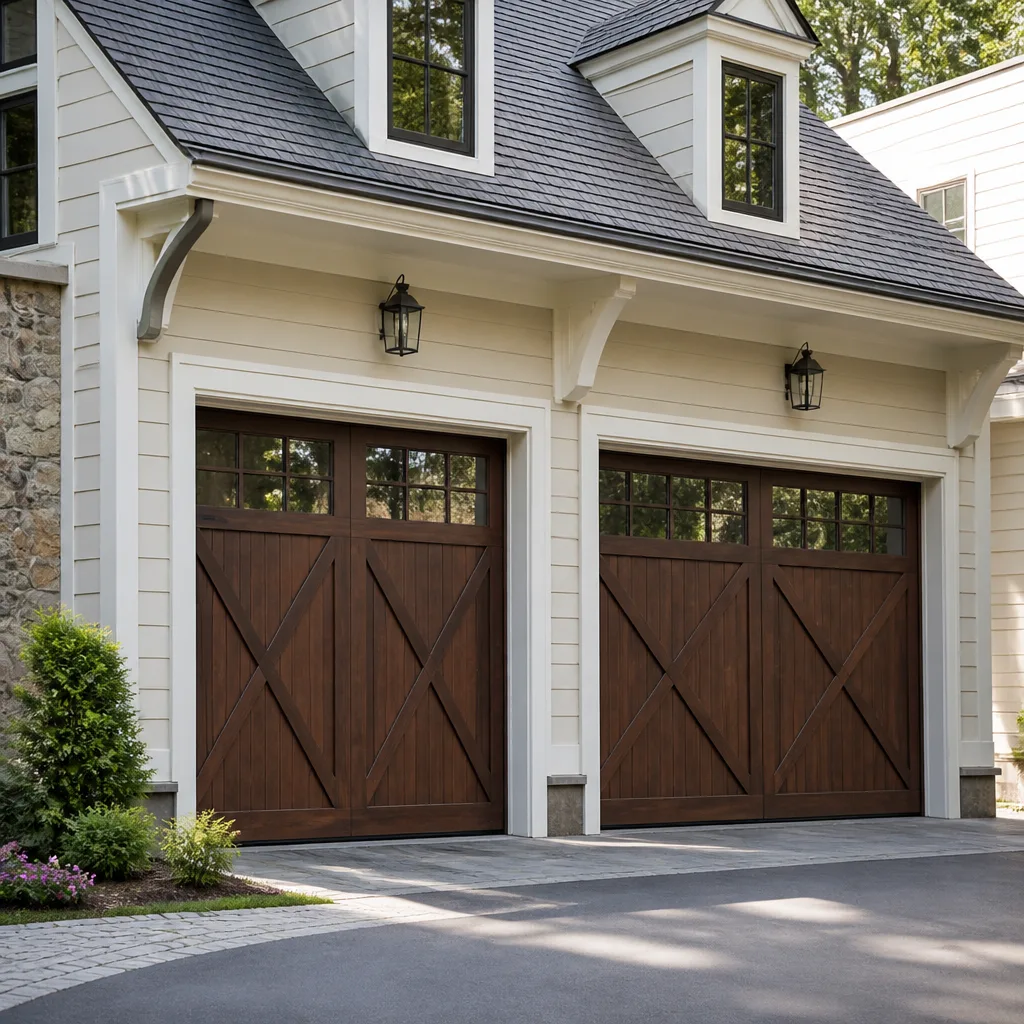 Carriage house
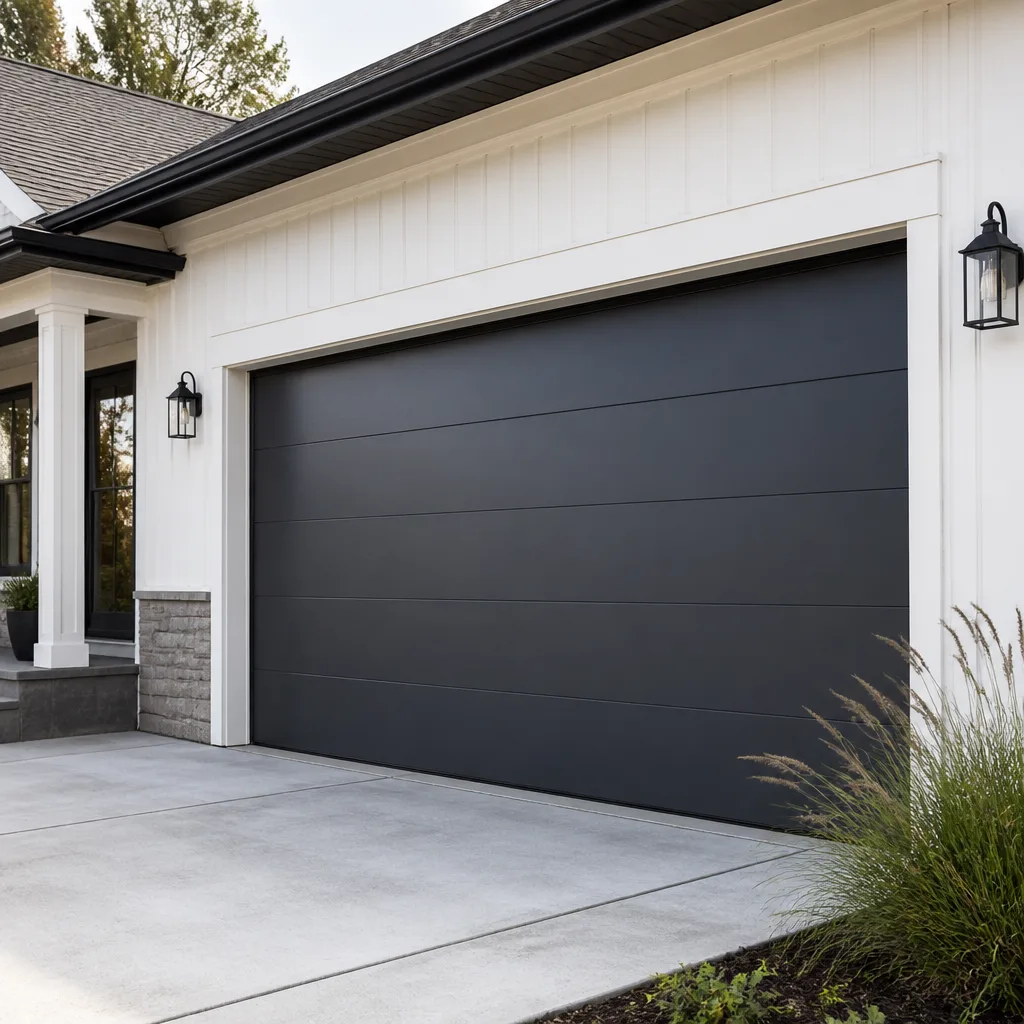 Modern flush
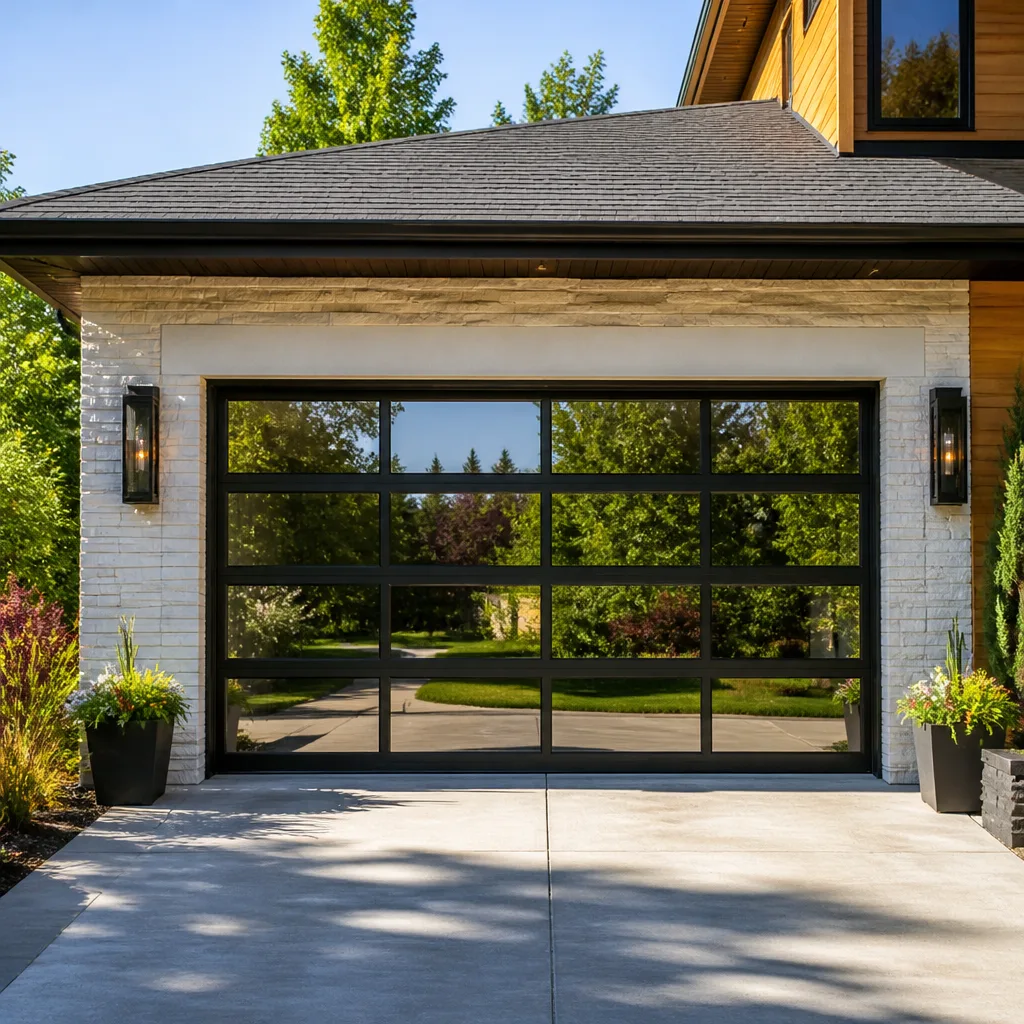 Full-view glass
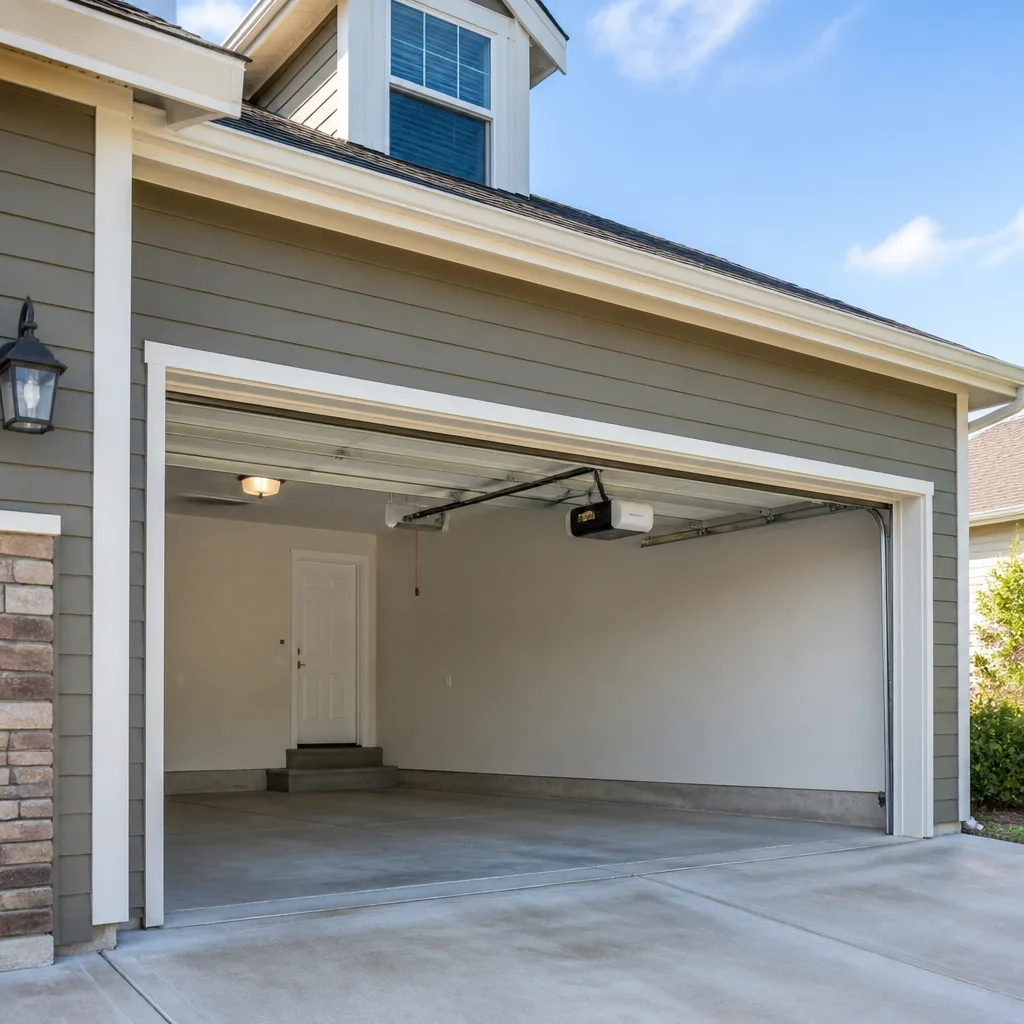 LiftMaster openers
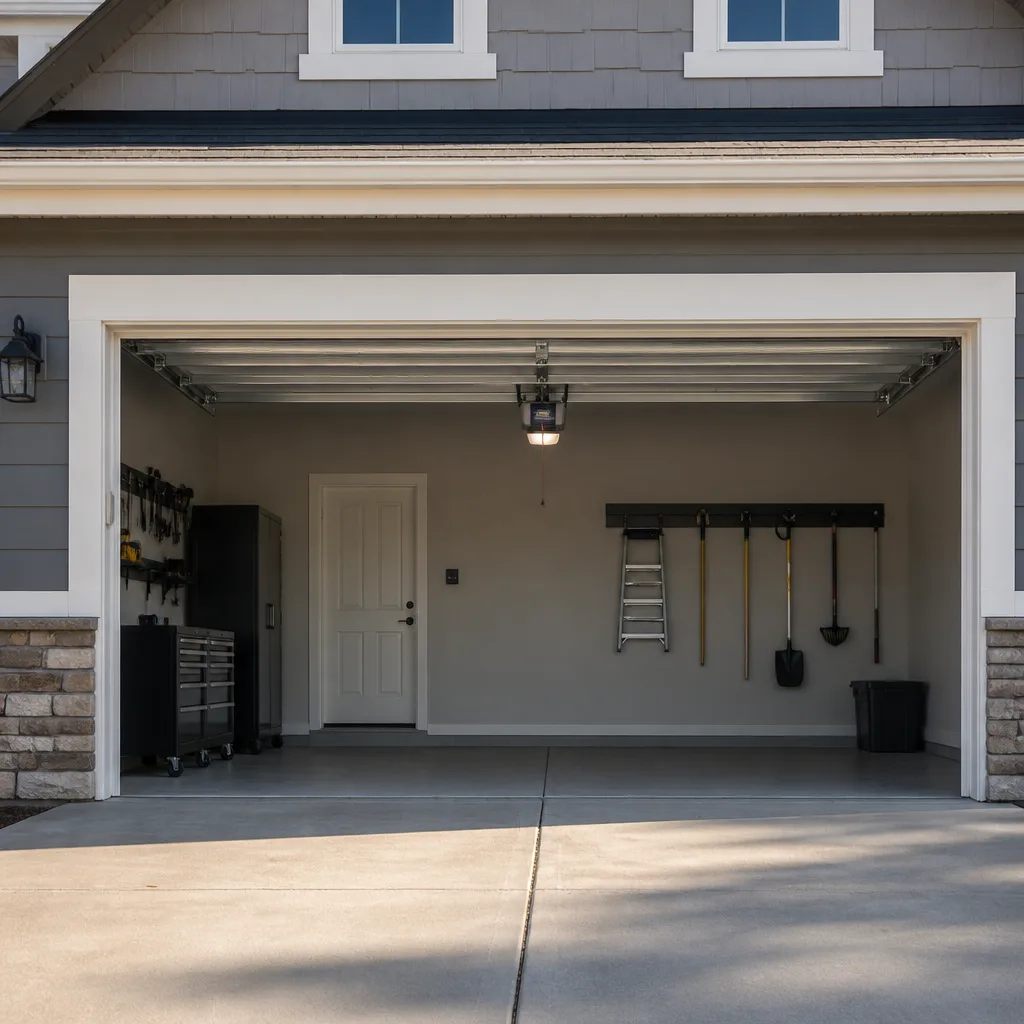 Chamberlain openers
Full 25-point door and opener safety check with every visit - springs, cables, rollers, tracks, and your LiftMaster or Chamberlain opener included
You get a price before we start. It does not change when the pro arrives.
Get your free estimateThe Complete Guide to Garage Doors in Issaquah
Most garage door guides are written for Phoenix or Dallas, where the enemy is heat and dust. Issaquah is the opposite. Here, the door faces more than 40 inches of rain a year, freeze-thaw cycles that work on metal and seals through winter, and hillside lots where a driveway can pitch enough that the opener fights gravity on every cycle. A door that’s “fine” in a dry climate wears differently here, and the failure points show up in different places first: rotting bottom seals, corroded torsion springs, openers that strain to lift a door on a slope.
This guide treats your garage door as a mechanical system shaped by Issaquah’s climate and terrain, not a one-size-fits-all product you order off a shelf. We’ll cover how our wet winters change what breaks and when, why your driveway grade matters more than you’d think, what HOA boards in Issaquah neighborhoods actually approve, and how to keep the whole system working instead of fixing one part at a time.
Quick Answer
A garage door in Issaquah needs a weatherproof bottom seal, a torsion spring sized for your door’s weight and a well-lubricated balance of tension and counterbalance, and an opener with enough torque for your driveway’s slope. The wet, freeze-thaw climate wears out seals and springs faster than dry climates, and hillside driveways put extra load on openers. If you want the short version: keep the seal, the spring, and the opener matched to each other and to your grade, and get a spring or opener checked the moment the door starts moving unevenly.
For anything safety-critical, a trained professional should do the work. garage door spring repair is not a homeowner job.
Styles & brands we work with
- Raised-panel steel
- Carriage house
- Modern flush
- Full-view glass
- LiftMaster openers
- Chamberlain openers
Table of Contents
- How Issaquah’s Wet Climate Wears Out Your Door Differently
- Why Hillside Driveways Change Everything
- The Full System: Spring, Panel, Opener, and Seal
- HOA Approval in Talus, Issaquah Highlands, and Klahanie
- Brand Coverage and Parts Availability in East King County
- Seasonal Maintenance for Issaquah Homeowners
- Repair vs. Replace: How Issaquah Homeowners Decide
- Common Mistakes to Avoid
How Issaquah’s Wet Climate Wears Out Your Door Differently
Wind a dry-climate guide’s advice into a wet climate and you’ll spend money in the wrong places. In Issaquah, the humidity and rainfall don’t just make the door wet. They change the order things fail in, and the failure starts at the bottom of the door and works up.
The bottom seal is the first casualty. A rubber or vinyl seal sits in standing water on wet driveways and stays damp through the long wet season. Over a few seasons it cracks, hardens, loses its lip, and stops sealing. Once it’s gone, water tracks under the door, gets into the threshold, and the door starts catching or dragging as the floor gets uneven. That’s a separate bill from the one you expected.
Springs are the second issue, and it’s subtler. Torsion springs are steel under constant tension, and moisture in the air plus condensation on cool metal is a recipe for corrosion at the coils. Rust pits the wire, and pitted wire is where springs snap. In a dry climate, a spring often lasts its designed cycle count. In Issaquah, we see corrosion-driven failures show up earlier and more often on doors that sit facing a rain-exposed direction.
- Bottom seal rot: cracks, hardens, and loses its lip from constant damp – replace before water reaches the threshold.
- Torsion spring corrosion: rust pits the coils and cuts spring life short; watch for a door that gets heavier to lift or drops fast on the way down.
- Track and hinge sludge: dust plus moisture equals a sticky track; rollers and hinges stiffen and the door drags.
- Panel moisture on wood and steel: wood panels soak water at the bottom edge; steel panels rust from the inside out where the coating gets nicked.
- Weather stripping at the sides and top: shrinks and pulls away, letting rain whip in during a sideways storm.
What this means for you: check the bottom seal every fall, watch the spring for rust, and treat a stiff track as a warning rather than a hassle. A door that runs a little rough in October may run a lot worse by February if the seal and spring aren’t addressed. If you’re seeing symptoms, garage door repair can diagnose the whole system before the small fix turns into a big one.
Why Hillside Driveways Change Everything
Issaquah is a hillside town, and hillside lots mean pitched driveways. A flat driveway lets the door ride straight up and down under its own counterbalanced weight, and the opener does very little work. A steep driveway changes the math. The door can be fighting a downward slope or hanging on an upward one, and the opener has to overcome that grade on every single cycle.
That leads to two practical requirements that generic buying guides tend to skip:
- Higher-torque openers. A standard opener rated for a flat-driveway door may strain on a steep grade. The motor works harder, runs hotter, and wears out sooner. On a pitch-heavy Issaquah lot, you want an opener matched to the load the grade adds, not the bare door weight.
- Counterbalance sized to the real load. Torsion springs balance the door against its weight. On a sloped driveway, the effective load can be higher depending on the door’s starting position and travel path. Springs sized for a flat installation can be under-matched, and an under-mounted spring means the opener does too much work and the door moves unevenly.
In our experience, slope is one of the most overlooked factors on an installation. Someone replaces a door on a hillside lot and keeps the old opener and spring setup, then wonders why the new door is slow, loud, or stops halfway. The door may be fine. The hardware isn’t matched to the grade.
If you’re on a steep driveway in Issaquah, ask whoever quotes the job how they’re accounting for the slope. A proper quote looks at the grade, the door weight, and the opener’s rated lift capacity together, not each part in isolation. That’s the kind of setup work we handle as part of Issaquah Garage Door Repair Pros service, and it’s worth getting right the first time.
The Full System: Spring, Panel, Opener, and Seal
Here’s where most repeat repair bills come from. A garage door is a system: the springs balance the door, the opener moves it, the panels are the door itself, and the seal and weather stripping keep the weather out. Replace one part without auditing the others and you’ll be back in a few months for something else.
Think about a spring replacement on a door whose opener is already on its last legs. The new spring does its job perfectly, but the tired opener is now cycling against a properly balanced door, and the higher effective load from a slope pushes it over the edge. Or consider a new door on old springs: the new door weighs something different, and the springs were sized for the old one. The opener overheats, the door travels unevenly, and now you’re replacing an opener that would have been fine if the audit had been done up front.
- Springs: carry the door’s weight. When they age, the door gets heavy and the opener overworks. Replace as a balanced set, not one at a time.
- Opener: should be rated for your door weight plus your driveway grade. A tired opener strains the moment anything upstream changes.
- Panels and hinges: carry the structure. Corroded hinges and a warped panel create binding that looks like an opener problem but isn’t.
- Seal and stripping: keep moisture out. A failed seal lets water in, which accelerates everything upstream.
The practical takeaway: when one component needs work, ask for a quick audit of the rest. A good technician checks the spring tension, the opener’s load, the track alignment, and the seal in one visit. If your door’s already giving trouble and you want the whole picture, garage door opener repair often uncovers the real culprit hiding a few inches away.
HOA Approval in Talus, Issaquah Highlands, and Klahanie
Issaquah has a lot of HOA-governed neighborhoods, and that adds a step that most door guides never mention. In communities like Talus, Issaquah Highlands, and Klahanie, replacing a garage door isn’t just a purchase. It’s an architectural request that has to clear your HOA board before the door goes on the house. Skip that step and you can be told to take a brand-new door back off.
What actually gets rejected? In our experience, the rejections cluster around the same handful of issues:
- Color mismatch. A door color that doesn’t match the home’s approved palette, or a shade that looks right on a swatch but wrong against the siding.
- Style change. Swapping a traditional raised-panel door for a modern flush or glass-panel door when the community’s design guidelines call for a consistent look.
- Window and glazing choices. Extra windows, different glass tints, or non-standard panel arrangements that read as a departure from neighbors.
- Materials the guidelines don’t list. Some communities restrict materials or finishes; a quote that ignores the guidelines wastes everyone’s time.
The way to avoid a rejection is boring but effective: get your HOA’s architectural guidelines before you shop, and bring your quote to the board with the specific model, color, and material spelled out. A door company that works in Issaquah regularly will know that the HOA step comes first, not last. If you haven’t started yet, it helps to line up your approval before you book an installation.
Brand Coverage and Parts Availability in East King County
One of the most common frustrations we hear is a homeowner getting turned away because they have the “wrong” brand. In the East King County market, the doors and openers on homes are a mix of the major residential brands, and some service companies only work on one or two of them. That leaves you hunting for someone who handles what you actually have.
We’re factory-familiar with eight of the most widely installed residential brands: LiftMaster, Chamberlain, Genie, Clopay, Amarr, Wayne Dalton, Craftsman, and Raynor. That means we work with the actual hardware, not a generic workaround. When you call, you don’t have to worry about whether your opener or door falls outside someone’s comfort zone.
Opener coverage matters just as much as door coverage. LiftMaster, Chamberlain, Genie, and Craftsman openers are everywhere in Issaquah homes, and they’ve moved from basic remotes into connected systems. Newer LiftMaster and Chamberlain units tie into smart-home platforms, and Genie has its own connected line. Repairs on those systems need someone who knows the platform, not just someone who can swap a motor. Upgrades are the same story: if you’re modernizing an older opener, we can match the replacement to what your home already runs.
For a quick check on your setup, the opener and door brand are usually printed on a label on the opener housing or the inside of the door panel. Snap a photo of it before you call, and the conversation starts with the actual model instead of a guess.
Seasonal Maintenance for Issaquah Homeowners
Homeowners in dry climates can get away with a once-a-year glance. In Issaquah, the wet season does most of the damage, so the useful maintenance sits on a seasonal rhythm. These are the checks and the timing:
- Early fall (before the rain sets in). Test the bottom seal for cracks or a lost lip. Clear the track of debris. Lubricate the rollers, hinges, and springs with a garage-door-rated lubricant. This is the check that pays for itself once the wet weather hits.
- Mid-winter. Watch for the door slowing, catching, or stopping partway. Cold plus moisture stiffens parts, and a stiff door is often a spring or opener warning. Look at the spring coils for rust.
- Spring. After the wet season, check the track alignment and tighten any loose hardware. Have the spring and opener load checked if the door has been rough through winter.
- Summer. Test the safety reverse and the door’s balance. With the door disconnected from the opener, it should hold about halfway up on its own. If it drops, the spring balance is off.
Two of these checks you can do safely from the floor: the seal inspection and the balance test with the door disconnected. Anything that involves the spring itself is a different matter. Torsion springs sit under extreme tension, and adjusting them or getting near the coils is where serious injuries happen. We don’t walk homeowners through spring work, and nobody should. Leave the spring to a trained technician and stick to the checks that keep you on the ground.
If a fall tune-up turns up a spring that needs replacing, it’s a good time to have the whole system looked over rather than just the spring swapped.
Repair vs. Replace: How Issaquah Homeowners Decide
The repair-or-replace question doesn’t have one answer, but it has a useful framework. Repair usually wins when the door structure is sound and the problem is in the mechanicals. Replace usually wins when the structure itself is failing.
- Repair when: the door panels are solid and the tracks are straight, and the issue is a broken spring, a failing opener, a worn seal, or a roller and hinge problem. These are isolated mechanical failures, and fixing the part solves it.
- Replace when: the panels are rusted through, warped, or damaged beyond repair, the door is the wrong weight or size for the opening, or you’re facing a string of repairs across the same door in a short window.
- Upgrade when: the door works but the opener is outdated, the door is loud enough to bother the household, or you’re modernizing for a connected home and smart-home control matters to you.
In Issaquah, the weather adds one wrinkle: a door that’s been fighting rain for years often has hidden panel moisture or corrosion that a visual check from outside misses. A technician who inspects the door from the inside and checks the bottom edge will spot what a homeowner won’t. That inspection is worth doing before you decide, because replacing a perfectly good door over a $200 fix is the most avoidable expense in this trade, and so is sinking money into a door that’s about to fail altogether.
Common Mistakes to Avoid
- Replacing only one spring on a matched set. Garage doors use matched springs, and when one goes, the other is usually close behind. Swapping a single spring leaves the door unbalanced and puts the next failure on a short clock. Replace the pair.
- Sizing the opener without the driveway slope. On an Issaquah hillside lot, a standard opener may be under-matched for the grade. Match the opener to the load your driveway actually adds.
- Skipping the HOA architectural request. In Talus, Issaquah Highlands, Klahanie, and similar communities, installing before approval can mean removing a new door. Get the board’s sign-off first.
- Ignoring the bottom seal. A cheap seal that fails lets water into the threshold and accelerates spring and track problems. Check it every fall, before the wet season.
- Buying a door without matching the springs and weight. A new door weighs something different. Keep the old springs and the opener has to overcome the mismatch on every cycle.
- Greasing the tracks. Tracks don’t need grease; grease collects grit and makes the door drag. Lubricate the rollers, hinges, and springs instead.
- Trying to adjust a torsion spring yourself. Springs sit under extreme tension, and this is the single most dangerous part of the system. Leave it to a trained technician.
See the difference
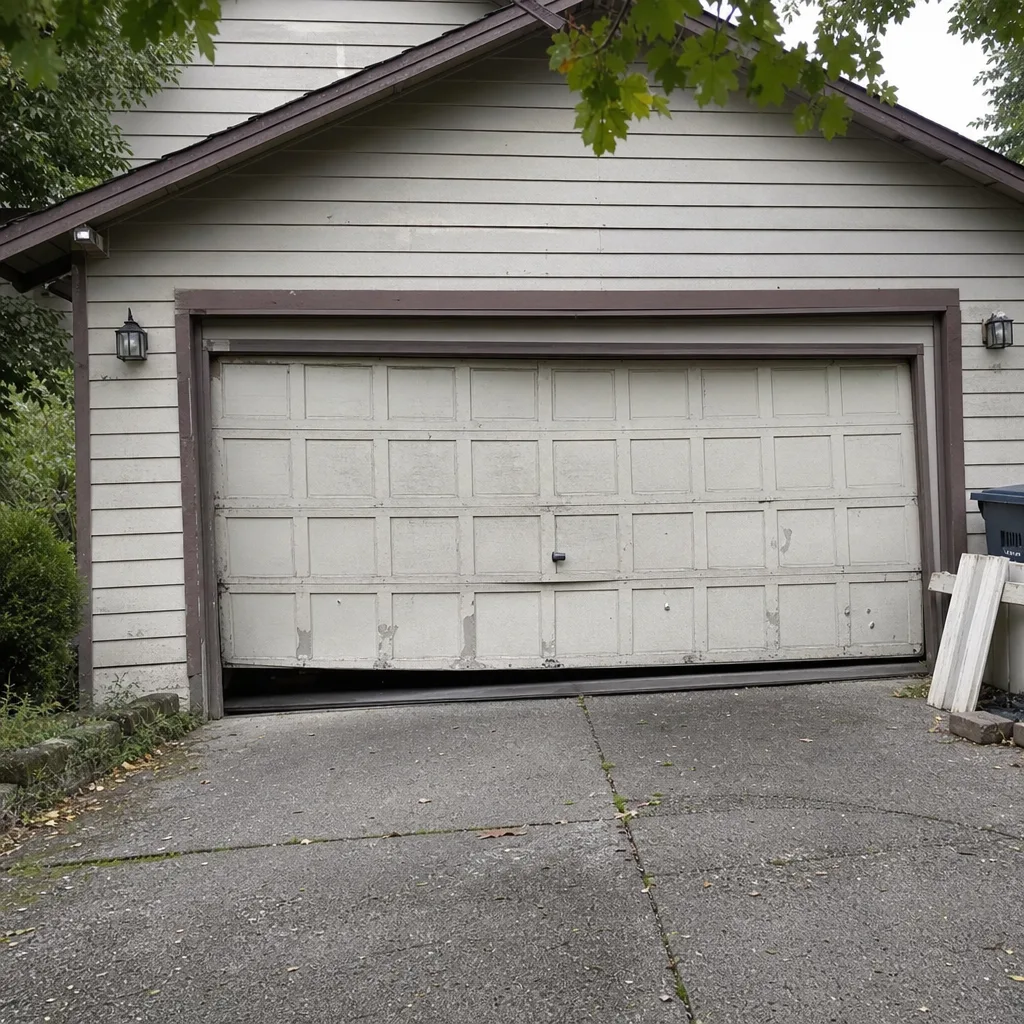 Before
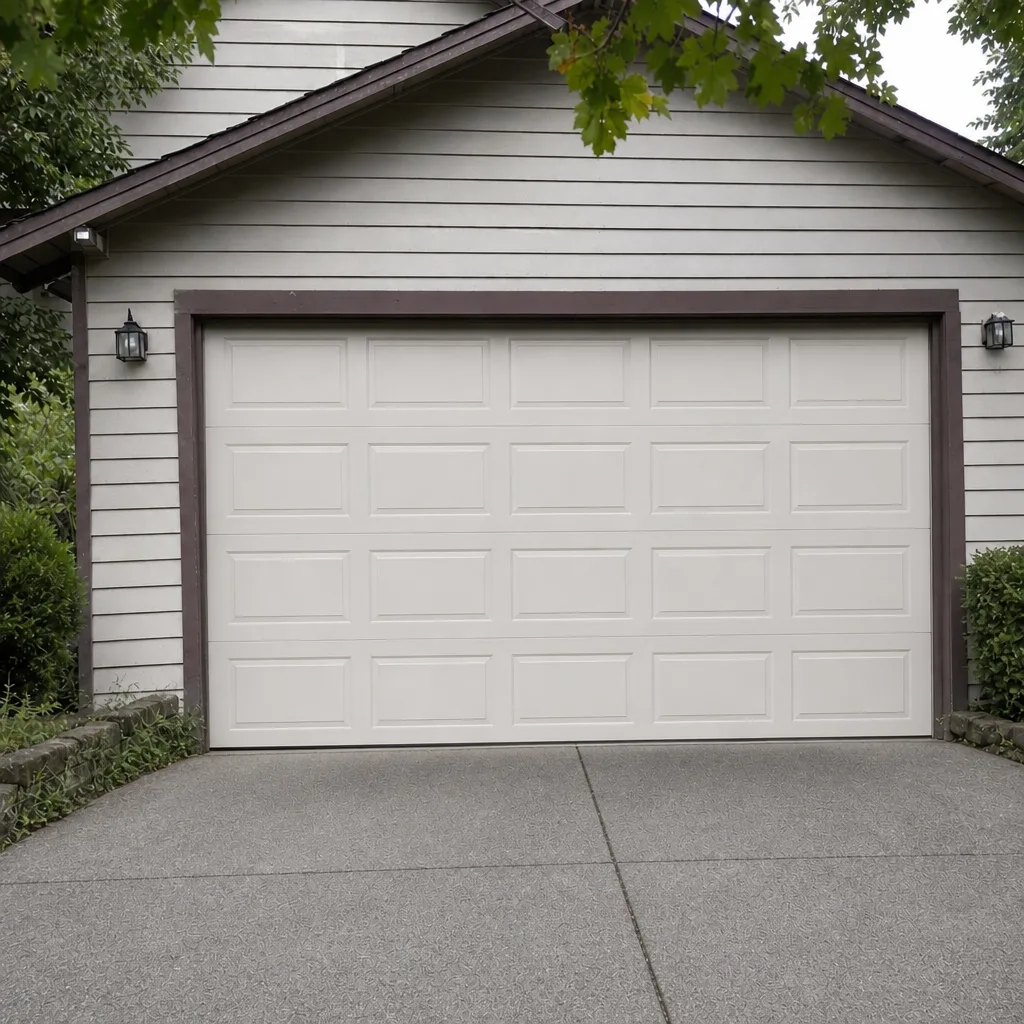 After
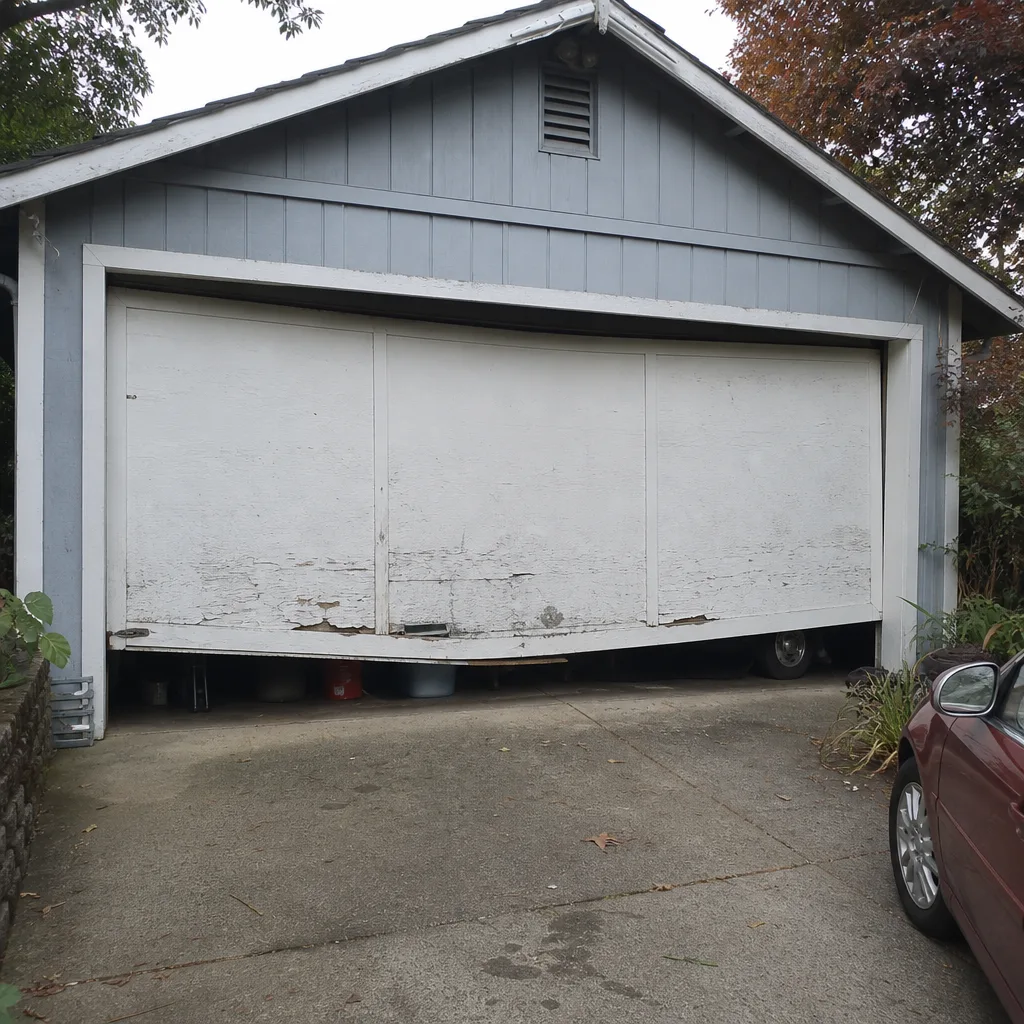 Before
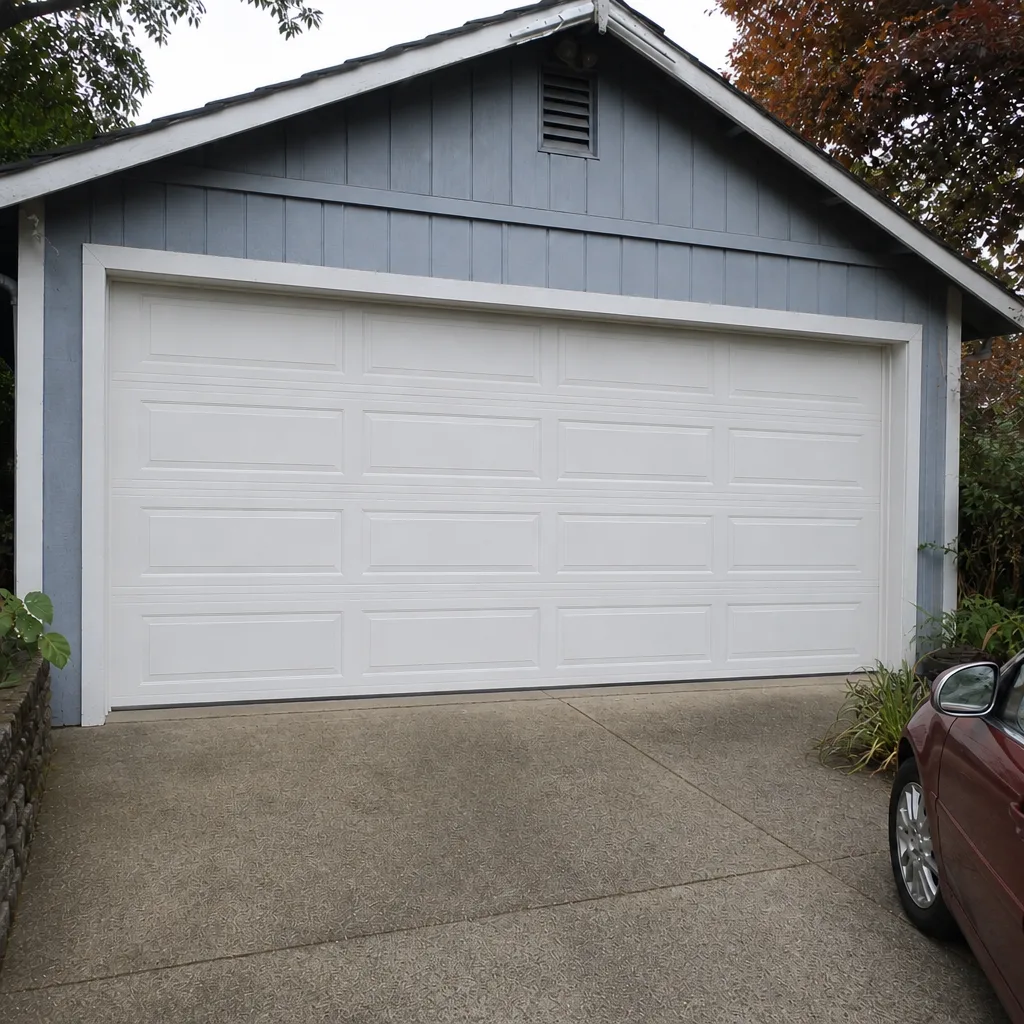 After
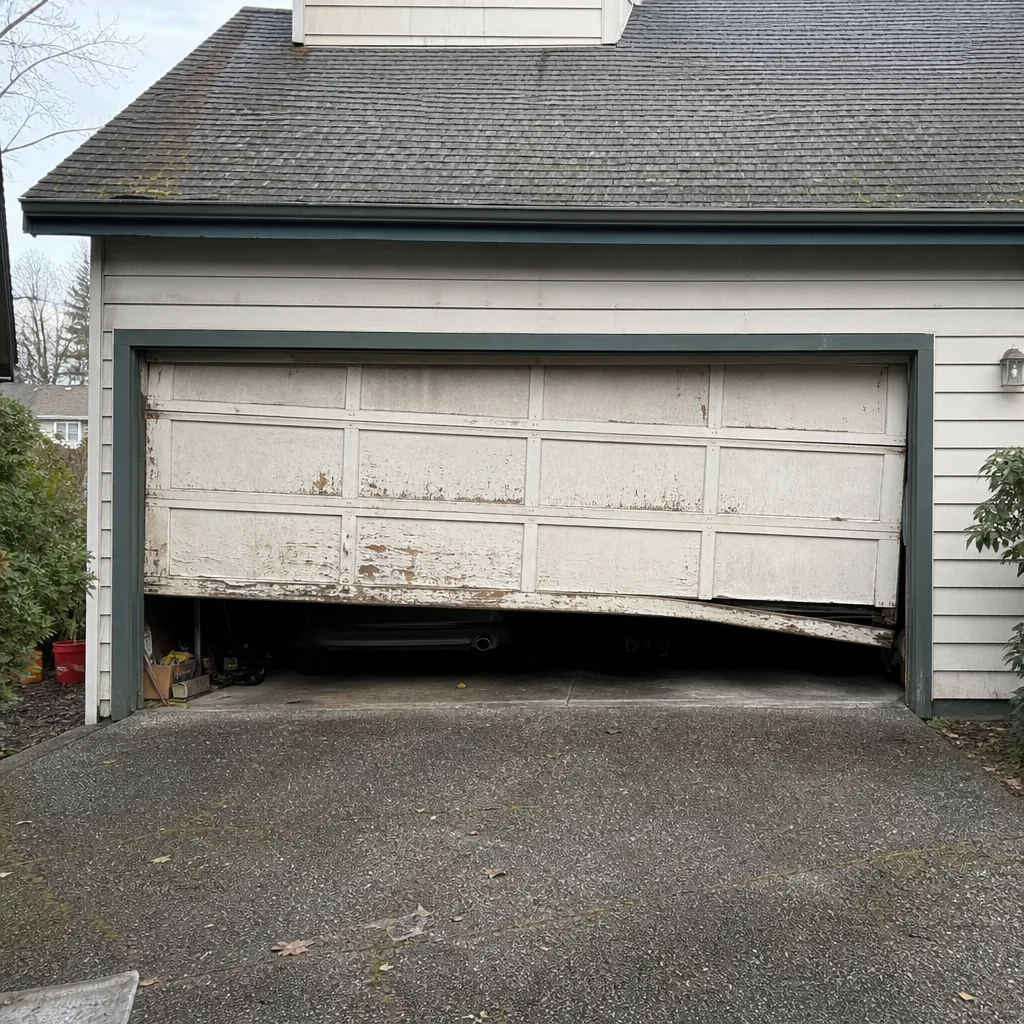 Before
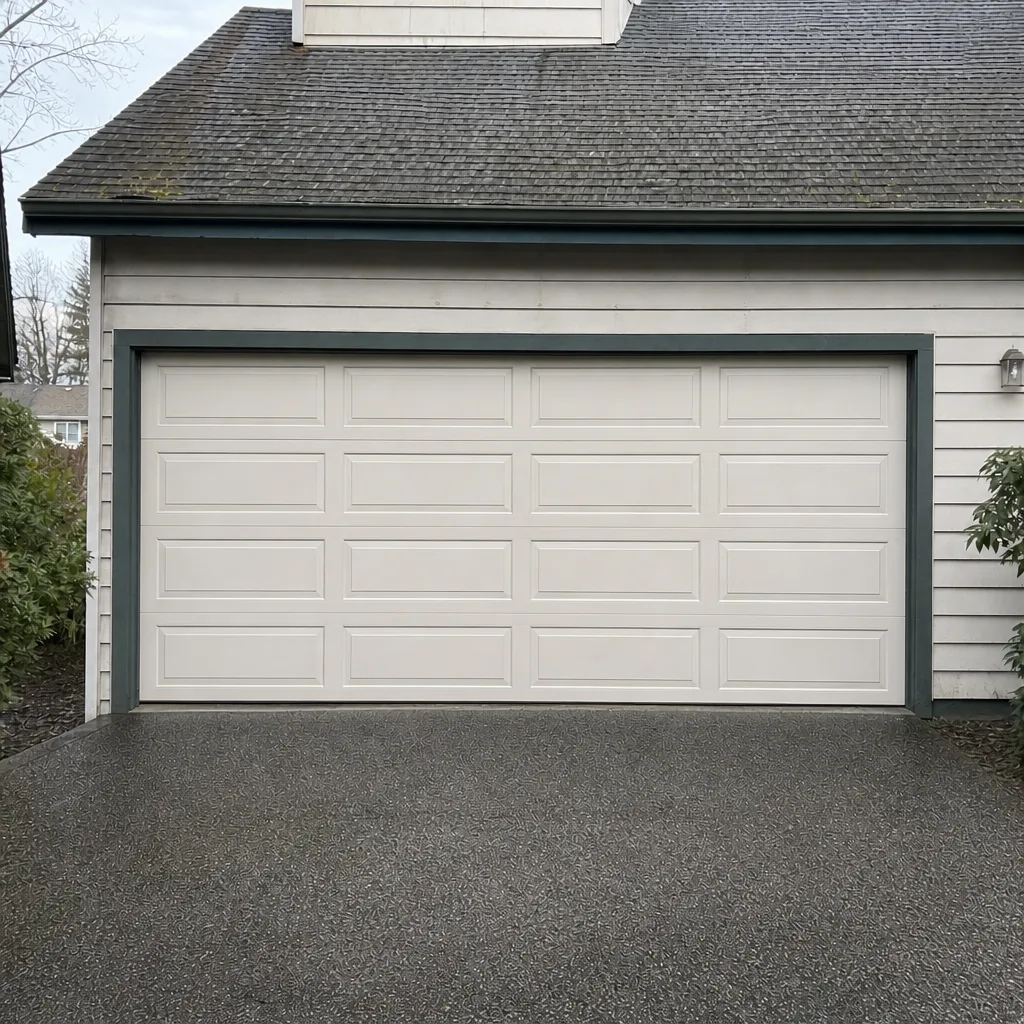 After
When to Call a Professional
Some garage door symptoms are safe to watch and some need a call right away. Call a professional if the door moves unevenly, stops partway, or drops fast on the way down. Call if you hear a loud snap followed by a door that won’t lift. Call if the opener runs but the door doesn’t move, or if a panel is bent and the door binds in its track. And call before any spring adjustment, full stop. A trained professional has the tools and the technique, and the consequences of getting a torsion spring wrong are serious.
Emergency service is built into what we offer, not an add-on. If your door is stuck down and the garage is the only entry, or it’s stuck open and the house is exposed, that’s a situation where a malfunctioning door becomes a security question, and it’s worth a call to get it sorted.
Issaquah Garage Door Repair Pros offers free estimates in Issaquah, and the written quote is agreed before any work starts. Call (833) 754-9516 to talk through what’s happening with your door.
Frequently Asked Questions
Most garage door repairs in Issaquah fall into a typical range depending on what’s wrong: a bottom seal or weather stripping is a small job, an opener repair or replacement is a mid-range job, and spring repair sits in the middle to upper range because of the skill and safety work involved. The written estimate is the price, and it’s agreed before any work starts, so there’s no surprise invoice when the job is done. Call (833) 754-9516 for an exact quote – estimates are free.
Same-day and emergency service is available for repair work, including when a door is stuck down or stuck open and the house is exposed. New door installations are a different schedule: they’re measured, ordered, and booked in advance, so we quote a free measure and a written price rather than promising same-day install. For a repair, call (833) 754-9516 and we’ll get you on the schedule.
No – the price is quoted and agreed before any work begins, so the estimate you accept is the invoice. An on-site inspection can turn up something the phone conversation couldn’t, like a hidden panel issue or a worn opener load, and if that happens we’ll walk you through the revised quote before we touch anything. Nothing gets done without your okay. Call (833) 754-9516 for a free estimate.
The local professional doing the work is licensed and insured as their state requires. Our job is to connect you with vetted local professionals, and we work with technicians who’ve handled residential garage doors across the major brands – LiftMaster, Chamberlain, Genie, Clopay, Amarr, Wayne Dalton, Craftsman, and Raynor. Our technicians have up to 12 years of experience. Call (833) 754-9516 for a free estimate.
Torsion springs are steel under constant tension, and Issaquah’s humidity and rain mean condensation on cool metal through much of the year. That moisture accelerates corrosion at the coils, and rust pits the wire, which is where springs break. A dry-climate spring often goes the distance on cycle count; a wet-climate spring can fail on corrosion well before that, especially on a door facing a rain-exposed direction. If your door has gotten heavy to lift or drops fast on the way down, have it checked – call (833) 754-9516.
In many Issaquah neighborhoods, including Talus, Issaquah Highlands, and Klahanie, yes – a new door needs the architectural board’s approval before installation. Get your community’s design guidelines first, then bring the board a quote that names the specific model, color, and material. Approvals go smoother when the details are spelled out. Call (833) 754-9516 with the door info and we’ll help you sort out the quote.
The Bottom Line
Issaquah isn’t a “buy a door and forget it” climate. The wet season wears out bottom seals and corrodes torsion springs faster than dry-climate guides account for, hillside driveways put load on openers and demand springs sized for the real weight, and HOA-dense neighborhoods add an approval step before the door goes on. Treat the door as a full system – spring, opener, panels, seal – and audit before you replace one part. For safety-critical work like spring repair, leave it to a trained professional. If your door needs a look, call (833) 754-9516 for a free estimate in Issaquah.
Written by the team at Issaquah Garage Door Repair Pros.